

Belonging to Everyone Who Believes

Shikshagraha belongs to everyone who believes every child deserves an excellent public education. Change will not come from the centre alone — it will come when schools, communities, and systems move together.

our story

How Shikshagraha Began

How can we improve 1 million public schools and shift public perception of them? How can we view India as 806+ thriving districts? How can Samaaj-Sarkaar-Bazaar-Sanchaar partnerships drive change at the grassroots level? These questions sparked the creation of Shikshagraha — rooted in the belief that lasting change in education comes from collective action with those closest to the child.

why movements matter

India's Greatest Shifts Have Come from Collective Action

Movements such as the Indian Freedom Movement, Women's Rights Movement, Chipko Movement, Swachh Bharat, emerge when people recognise that the way things are is not the way they should be — and choose to act together.
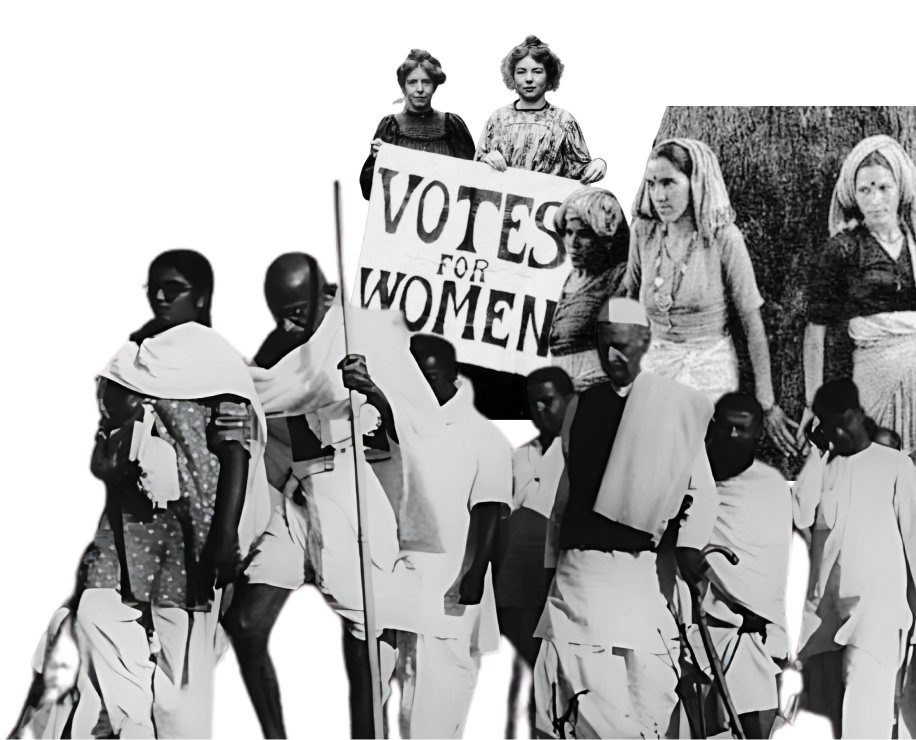
These movements shifted norms. Education now needs a shift of similar depth and urgency.

Pillars of the movement

Four forces, one movement

Lasting change in public education happens when all four parts of society move together. No sector can do it alone.
Shikshagraha is the connective tissue that makes this possible.

*tap on the petals to know more
  • SocietySamaaj

    SocietySamaaj

    Communities, parents, teachers, and civil society drive demand and lead change — holding education as a shared responsibility from the school gate to the district.
  • GovernmentSarkaar

    GovernmentSarkaar

    District and state governments co-create programs, open schools to transformation, and embed lasting change at scale — not just pilot and move on.
  • MarketsBazaar

    MarketsBazaar

    Businesses, funders, and CSR partners bring resources, tools, and innovation to where they're needed most in public school improvement.
  • MediaSanchaar

    MediaSanchaar

    Media and storytellers shift public narrative — celebrating public school excellence and making education a topic of urgency, pride, and collective identity.
who we are & how we work

Our Values & Operating Principles

Shikshagraha is rooted in four core values that shape who we are — and six principles of Societal Thinking that guide how we work in the world.
*tap on the petals to know more

PrincipleCatalyse Interactions

We create spaces where government, civil society, communities, and markets can learn from and inspire each other, building toward a shared goal for every child.

PrincipleSeek Rapid Evolution

We experiment, learn quickly and adapt continuously– never treating our current approach as the final answer. The movement evolves as fast as the challenges we face.

PrincipleEmpower with Data

We put information in the hands of those who can act on it – teachers, school leaders, and community members, so that they can make better decisions for every child.

PrincipleBuild Public Goods

We create knowledge, tools, and resources freely available to anyone working to improve public education. Our learning belongs to the movement, not to us.

PrincipleOpen Value Creation

We ensure essential information, technology, and data are open and accessible, empowering every actor to freely develop solutions and create value in response to their needs.

PrincipleInspire Co-Creation

Solutions are co-created with communities, not delivered to them. We design with, not for– because people closest to the problem carry the deepest insight about the solution.

PrincipleResolve for Diversity

India’s diversity is a strength. What works in one context must be adapted thoughtfully and never imposed, because every district, community, and child is different.

ValueAgency

We trust and invest in the agency of those closest to children– teachers, parents, school leaders, and community members. Change happens when people are empowered to lead.

ValueOpenness

We learn openly, share freely, and build public goods others can use. Our knowledge, tools, and stories belong to the movement, not to us. Openness multiplies what we achieve.

ValueGrit

Systemic change is slow and hard. We bring steadfast commitment to the long game– supporting leaders and communities through difficulty and the gradual work of shifting norms.

ValueCollaboration

No single organisation or sector can transform education alone. We build bridges between communities, governments, civil society, and markets– our strength comes from working together.
how we shift norms

From Norms That Hold Back
to Norms That Lift Up

Shikshagraha takes a holistic yet targeted approach — building
the new alongside dismantling the old.

*tap on the cards to shift the norms

Government schools are only for families without other options

Government schools that every family is proud to choose

by demonstrating vibrant government schools through district transformation

Education is mainly the school's responsibility, not the community's

Communities that share responsibility for every child's learning

by equipping and engaging parents, youth, and local leaders to participate meaningfully

Good education means getting good marks

Education that values agency, confidence, curiosity, and real learning

by celebrating stories that show learning for life: well-being, agency, and participation

Teachers are expected to manage everything without support or community

A culture where teachers lead and grow with support and respect

by supporting teachers through micro-improvement and feedback loops

Decisions about education are taken from the top, far from children

Local voices that shape decisions and solutions

by co-creating programs and implementation pathways with state and district leaders

where we work

Focused Where the Need is Greatest

Over 340 districts fall below national averages in foundational learning. Shikshagraha focuses on districts where the need is clear, trusted partners are present, and the government is ready to co-create and go deep.

  • Need

    Low NAS performance in foundational learning — districts where the gap between potential and reality is widest.

  • Presence

    Trusted civil society partners on the ground with the state and at the district level — already building relationships.

  • Readiness

    Government openness to co-create and go deep — not just pilot, but embed change that lasts beyond a project cycle.

Be a part of the people’s movement for education equity