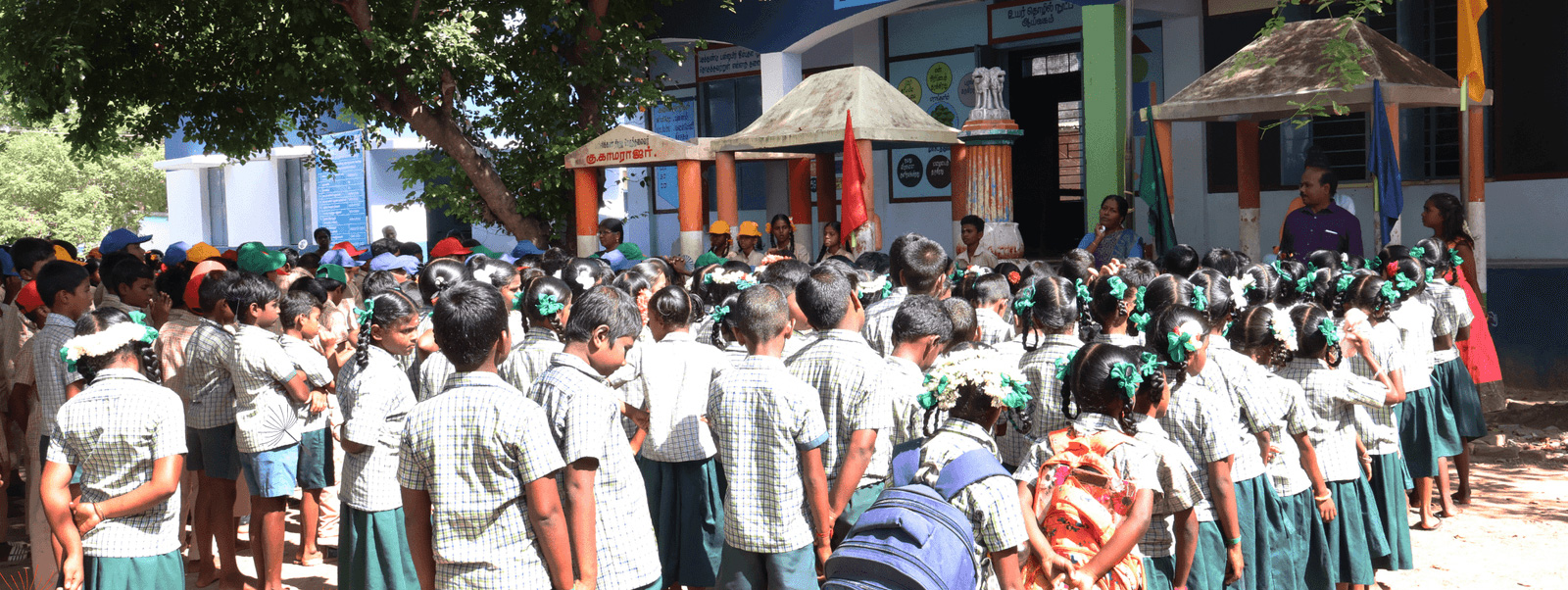

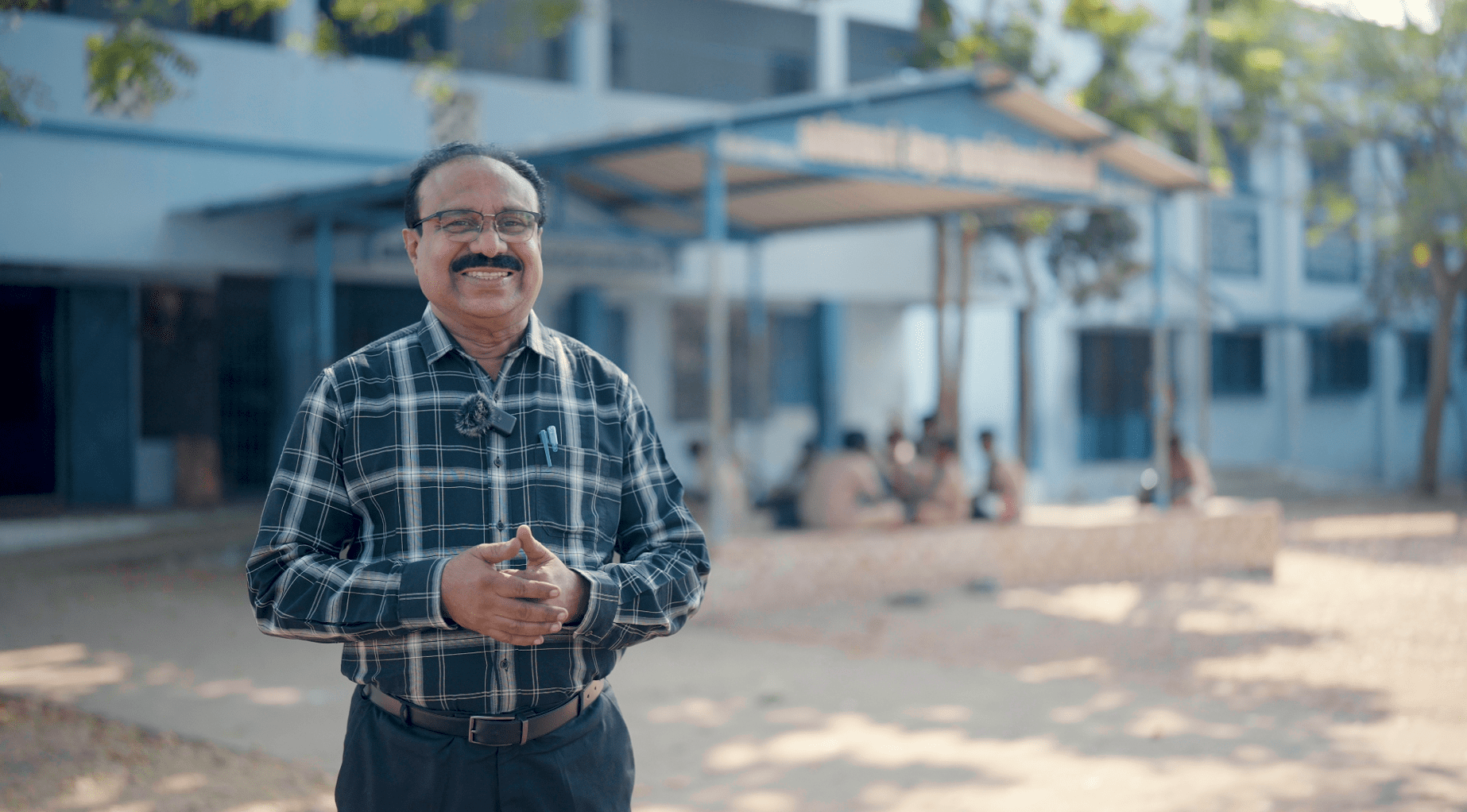
A 2025 Shikshagraha Awardee, Xavier took charge of the Vallalar School in 2021, at a time when it was struggling—academic performance had dropped, drug use was rising, caste divisions ran deep, and the campus had suffered major damage from a highway expansion.
“In today’s times, many children lack care and attention at home. When we, as teachers, offer that love, students begin to respect us, listen, and change,” says Xavier Chandra Kumar, Headmaster of Vallalar Government Higher Secondary School in Kandamangalam, Tamil Nadu.
A 2025 Shikshagraha Awardee, Xavier took charge of the Vallalar School in 2021, at a time when it was struggling—academic performance had dropped, drug use was rising, caste divisions ran deep, and the campus had suffered major damage from a highway expansion.
Let us hear from him on how a mix of discipline, empathy, and belief in his students helped rebuild the school’s spirit, and not just the necessary infrastructure.
Xavier Sir, you worked at Vallalar Secondary School previously as a physics teacher when the school was thriving. What went through your mind when you returned to this school as Headmaster and saw the condition of the school?
During my time as Personal Assistant to the Chief Education Officer, I passed Vallalar Secondary School regularly. I noticed the compound walls of the school getting damaged due to the nearby highway expansion. Over time, this provided easy access to trespassers who misused classrooms for drinking and other inappropriate activities which influenced students. Conversations with teachers revealed that with limited direction and support, it was difficult for them to maintain consistent routines or a strong sense of accountability with students. I remember praying to God many times, saying, “If I ever get an opportunity, I want to restore this school to its former glory”. This thought kept coming back to me.
What were the major challenges you faced, and how did you decide to tackle them?
There were several reasons behind the school’s decline. First, the impact of COVID: when schools went online, students were handed phones and exposed to new influences. Second, the school’s location posed an unforeseen challenge. Sitting on the border of Tamil Nadu and Pondicherry, students could easily cross over to access tobacco and other banned substances.
Parental involvement was also limited. While some expressed interest in their child’s education, most placed the responsibility entirely on the school. Around 120 students lived with a single parent or grandparents, often without supervision.
To rebuild the school’s culture, I brought back discipline, but through love and consistency. I began regular checks for mobile phones, encouraged neat grooming, and addressed the visible markers of caste, like coloured threads and sandals. When gentle reminders didn’t work, I took stronger action—cutting the threads and burning the sandals. It was a message that equality was non-negotiable.
My mother was a major influence on me. While strict, she was deeply compassionate, especially towards the poor. Even when we had little, she taught us to give.
What were your personal experiences that inspired you to become an educator?
Looking back, my life hasn’t been easy. I grew up in a well-off family—my father was a building contractor, and until sixth grade, I studied in a good English-medium school and enjoyed many comforts. But everything changed when he developed an alcohol addiction. As his habit worsened, we lost everything and moved from Nagercoil to Palani. Life there was tough—we struggled to afford food or pay my college fees, and I had to start working part-time to get by.
My mother was a major influence on me. While strict, she was deeply compassionate, especially towards the poor. Even when we had little, she taught us to give. She showed me how to balance discipline with kindness. Some may find me strict, but it comes from a place of love and a belief in doing what’s right. I see my students as my own children and lead with the same care my mother showed us.
Community involvement played a key role. I reached out to local leaders, politicians, and the school chairman for support.
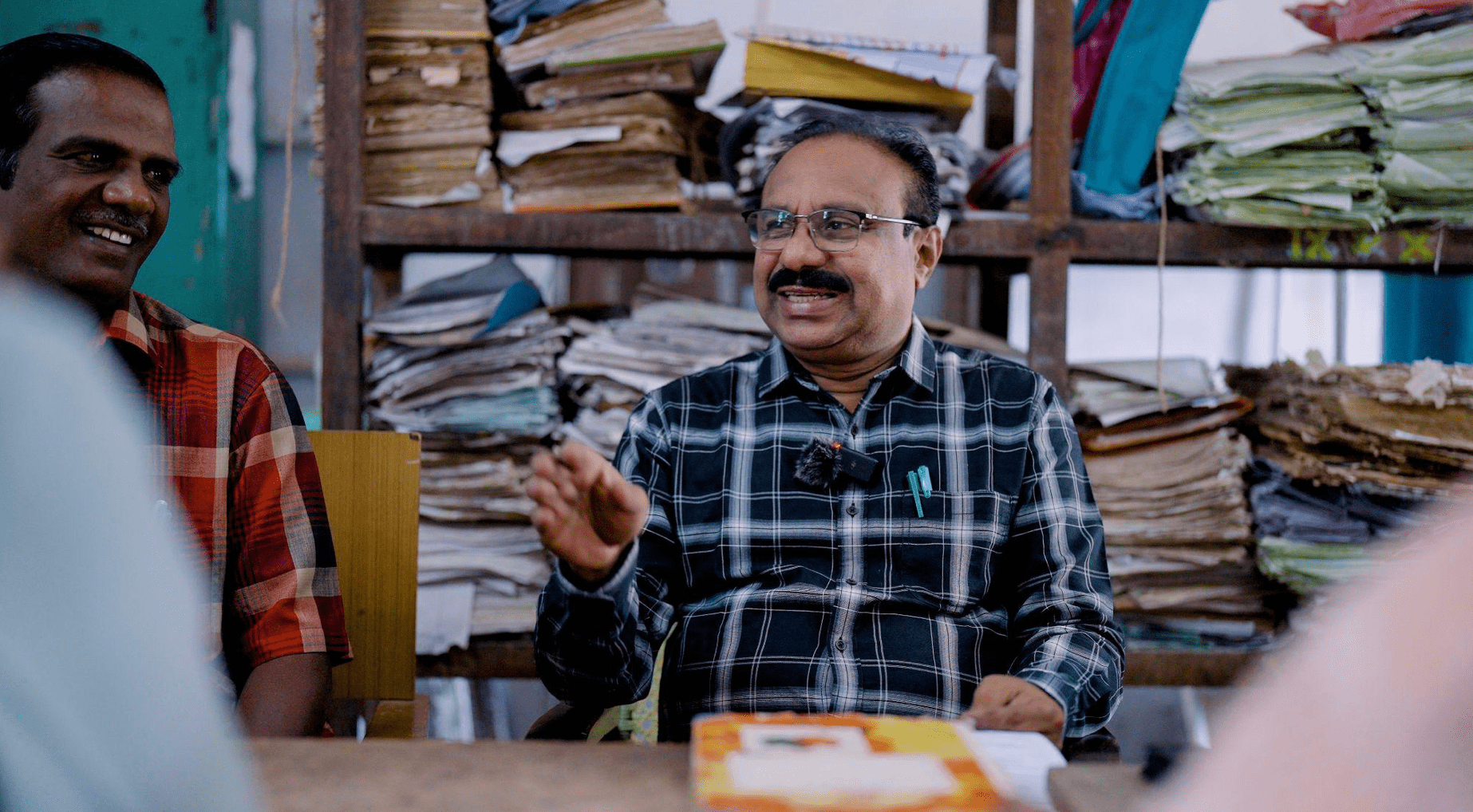
How did you get the community involved in improving this school?
We built trust in the community by engaging local politicians, parents, and key stakeholders like the police and Child Welfare Committee, all of whom offered strong support. With their backing, we confidently focused on three core areas: improving infrastructure, addressing student behavior, and activating the School Management Committee (SMC), which became fully engaged. We ensured a proper midday meal system, including diverse meals for marginalised children, and maintained a clean campus with a focus on exam preparedness, laying the groundwork for lasting change.
After COVID, when parents tried to enroll their children in the school, I asked parents not for money, but for small contributions like paint or uniforms for others. This approach built trust and showed my commitment to the school’s improvement, inspiring parents to believe in my vision of transforming our school into a model institution.
What advice would you give other leaders on a path to improving their schools?
The first step to our school’s revival was building strong relationships. I believe any transformation must begin with the school’s environment, so we repainted the building, introduced standard and house uniforms, and tried to build the school as a private institution.
Community involvement played a key role. I reached out to local leaders, politicians, and the school chairman for support. They saw my strong connection with parents and genuine commitment to the school, and many came forward, donating paint, uniforms, and materials. Their visible support created momentum.
With that trust, we expanded our support system. I invited police officials, including the Deputy Superintendent of Police, to speak to students about discipline, drug abuse, and school decorum. Their presence sent a strong signal that we were united in our mission.
What started with small acts of trust and teamwork has now grown into a collective effort to transform the school, not just in appearance, but in spirit.
—-
The applications for the Shikshagraha Awards 2026 will open in June 2025. Visit https://shikshagraha.org/awards/ for more information.