
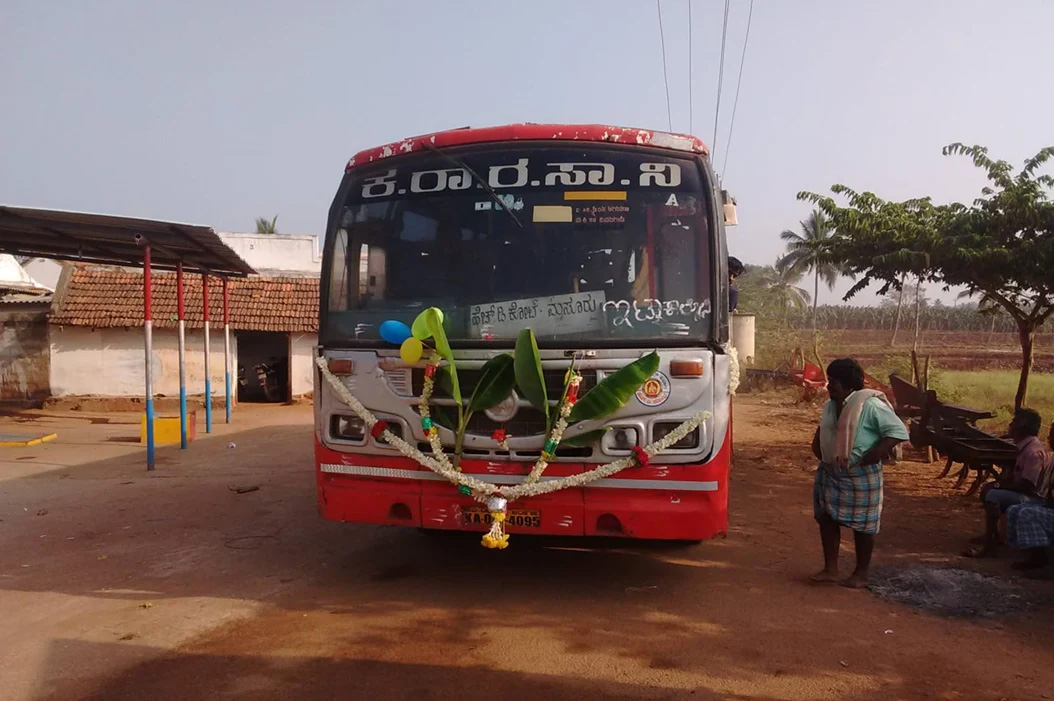
A KSRTC bus decorated with garlands and banana leaves by the community to mark the commencement of the new route in H.D. Kote Taluk
The morning mist would still cling to the forests of Heggadadevanakote (H.D. Kote) Taluk, Mysuru District in Karnataka when children began their perilous 8-kilometer trek to school. Through dense woodlands where tigers, leopards, wild boars, and elephants roamed freely, these young students risked their lives daily to access education.
For families in the 21 villages across Padukote and Hirehalli Gram Panchayats, this dangerous journey became an impossible choice between safety and schooling. The result was heartbreaking but predictable: girls stopped attending school and boys were pulled out to work on farms instead of pursuing education. Despite repeated pleas to authorities for bus services, their voices seemed to echo unheard through the corridors of bureaucracy.
The communities found their own strength, together.
The Power of Collective Voice
The transformation began with something simple yet profound: village conversations or gatherings called “Shikshana Chavadis” organised by IPEI Foundation, under the Shikshargraga movement. These weren’t just meetings—they were spaces where frustration transformed into strategy, where individual struggles became collective action.
In Padukote Gram Panchayat’s 11 villages, women’s self-help groups took the lead. They understood what was at stake better than anyone. When your daughter has to choose between education and safety, when your son’s future depends on a dangerous forest walk — these delays become more than inconvenience, they become injustice.
The community mapped out two strategic bus routes:
- Route 1: Connecting Devaraj Nagar, Muruganahalli, Itna Colony, and other villages to H.D. Kote, 55 women from SHGs, 68 students, and 30 elders made the petition to the Bus Depot Manager for this route
- Route 2: Serving additional villages (following a route through Padukote, Indra Nagar, GG Colony, Holi Katte, Savya Gram, Vaddar godi, HD Kote ) with backing from 40 women, 52 students, and 40 local leaders
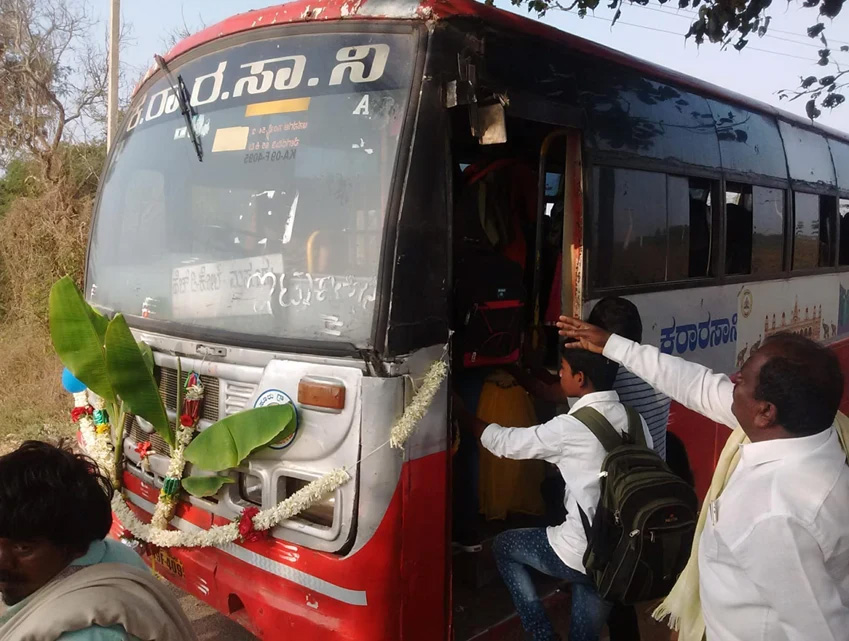
Local residents and students gather can now utilise the bus service that connects 21 villages to nearby schools
In Hirehalli Gram Panchayat’s 10 villages, including Penjalli, the pattern of missed opportunities repeated. 69 families lived without proper connectivity. Parents were sending 3-5 year olds to distant private schools because the local Anganwadi building was crumbling.
When Communities Say “Enough”
The turning point came when these groups moved beyond petitions to direct action. In the first week of July, after months of failed requests, they appealed to the H.D. Kote bus depot manager to arrange buses.
This wasn’t empty posturing. These were parents who had watched their children’s futures slip away, one dangerous walk at a time. The depot manager, finally understanding the gravity of the situation, acknowledged the oversight and agreed to immediate action.
The Ripple Effect of Success
Today, buses run along these once-isolated villages like lifelines. The numbers tell a story of transformation:
- About 100 students daily from Padukote area villages
- 80+ students from Hirehalli area villages
- Buses running every 2 hours from 9:30 AM to 6:30 PM on school days
- Morning departure at 8:00 AM, evening return at 4:30 PM
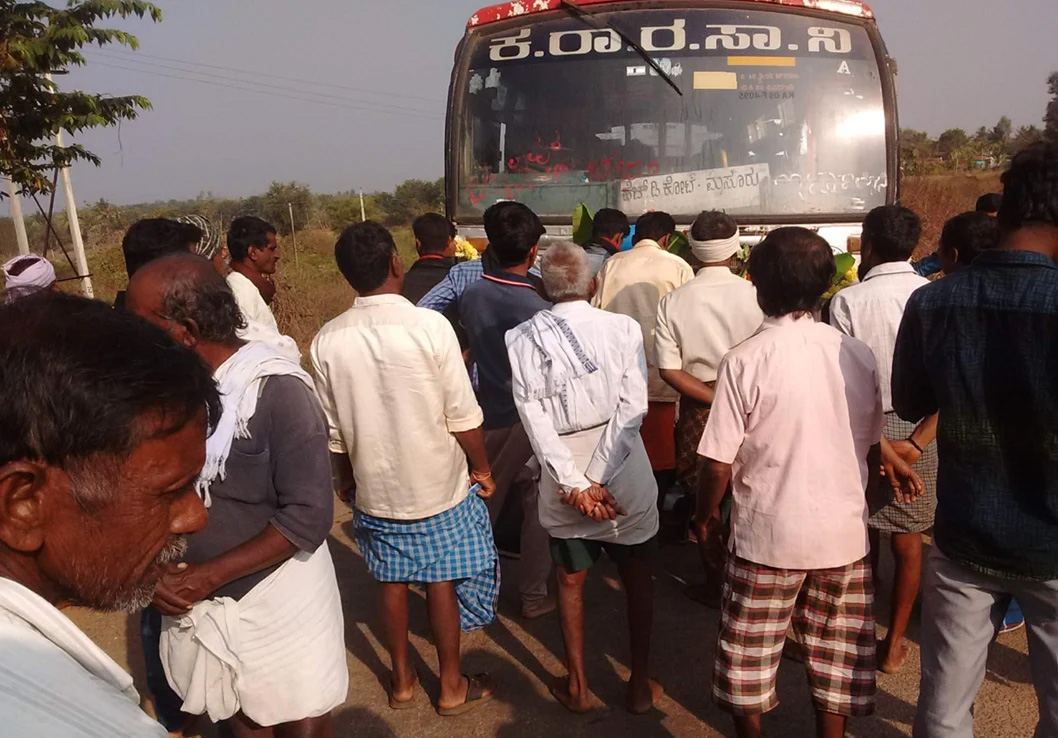
Community members and local leaders in H.D. Kote Taluk gather at the launch of the new bus service providing safe school transport for 21 villages. Sweets were distributed to the community members to celebrate the day.
But statistics only capture part of the victory. The real success lies in what these buses carry: hope, opportunity, and the restoration of childhood to its rightful place in classrooms—preparing for the future. .
Beyond Transportation: A Community Awakening
The bus service catalysed broader changes. In Penjalli village, the same collective energy that secured transportation also revitalised the Anganwadi. Community pressure led to building repairs, and parental attitudes shifted. Five children between the ages of 2–3 have recently enrolled, reversing the exodus to expensive private alternatives.
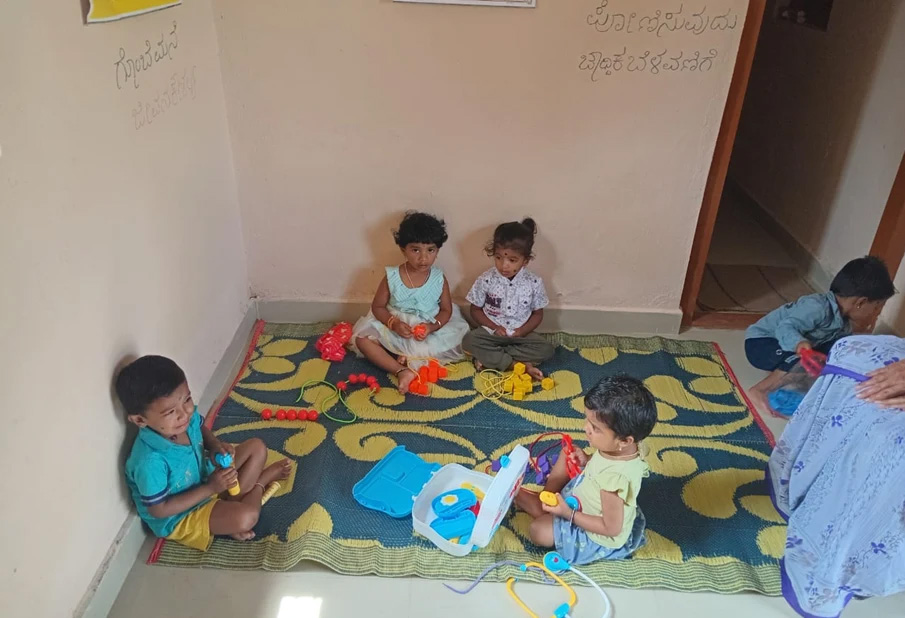
The impact on girls’ education has been particularly striking. While no formal census exists, community members report consistent school attendance among girls who previously faced impossible choices.
The Road Ahead
Nearly a thousand families across these 21 villages now have reliable access to schools and colleges.
In H.D. Kote Taluk, the morning mist still clings to the forests. But now, instead of small figures walking nervously through the trees, buses filled with eager students make their way safely to school. Sometimes, the most profound revolutions begin with the simple resolution that children shouldn’t have to risk their lives to learn.
Read The Times of India coverage of this remarkable story of community action here.