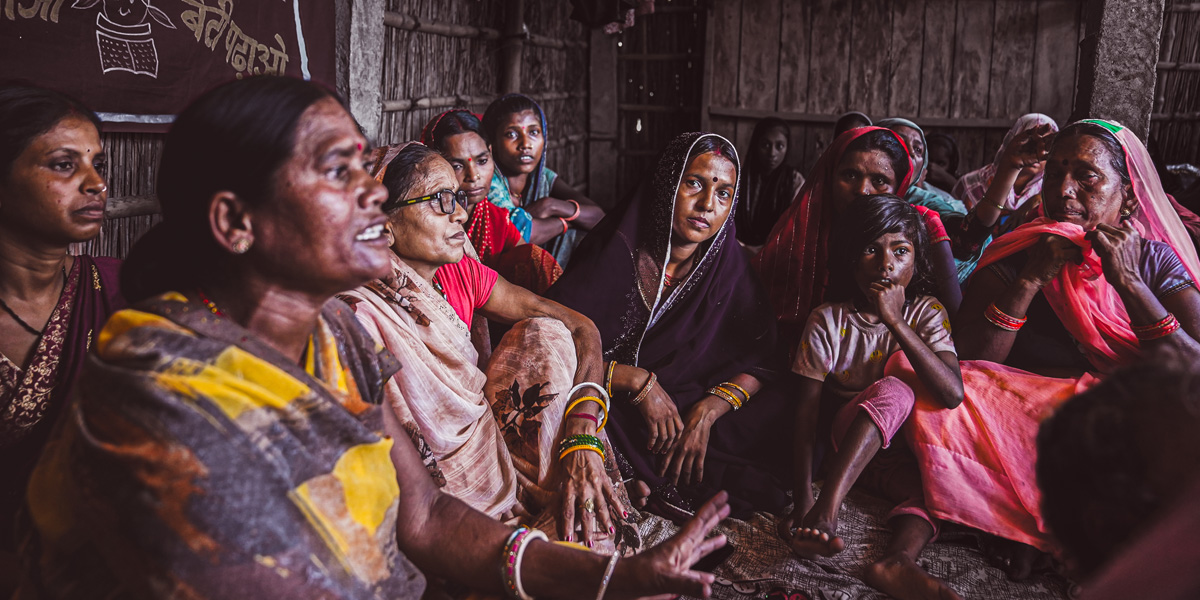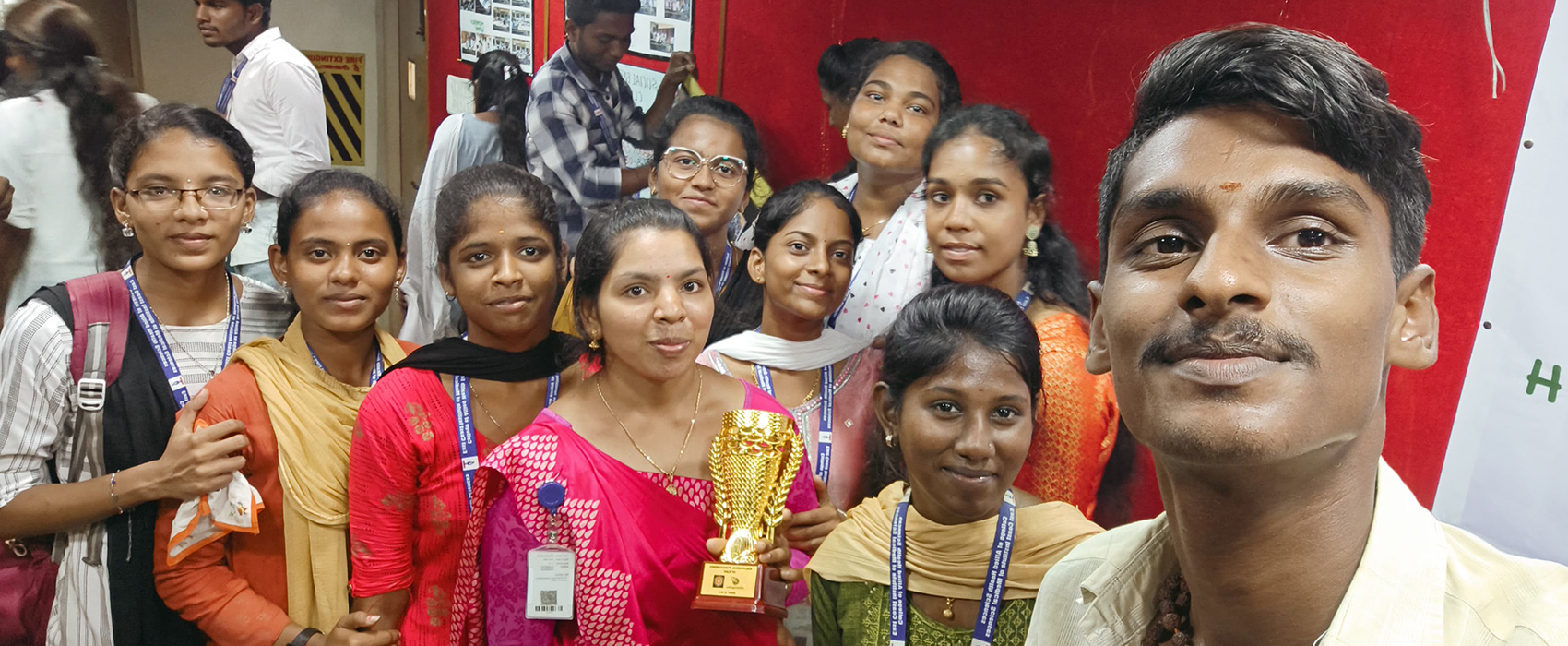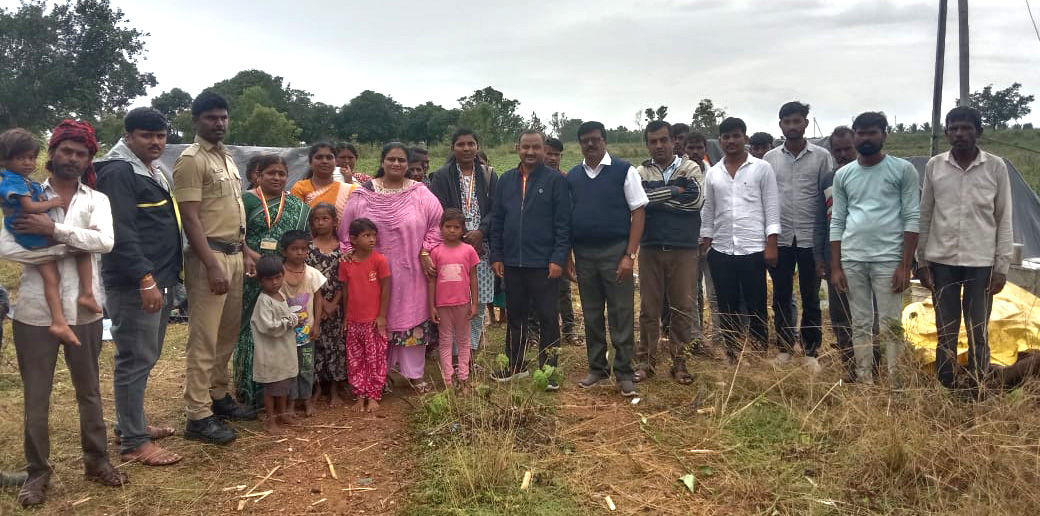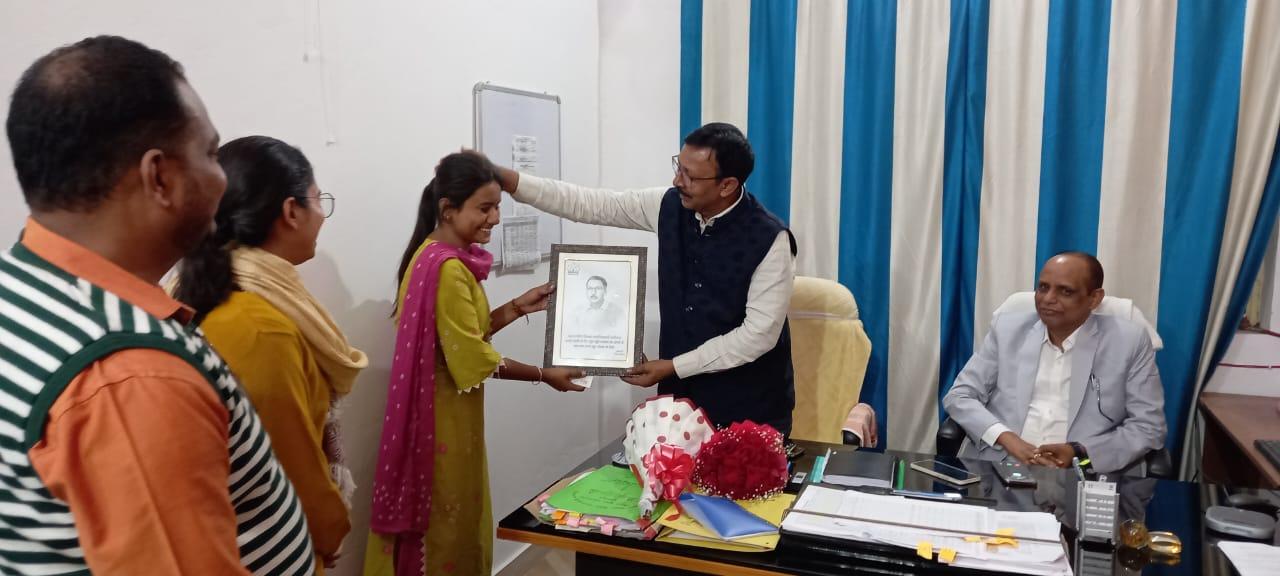

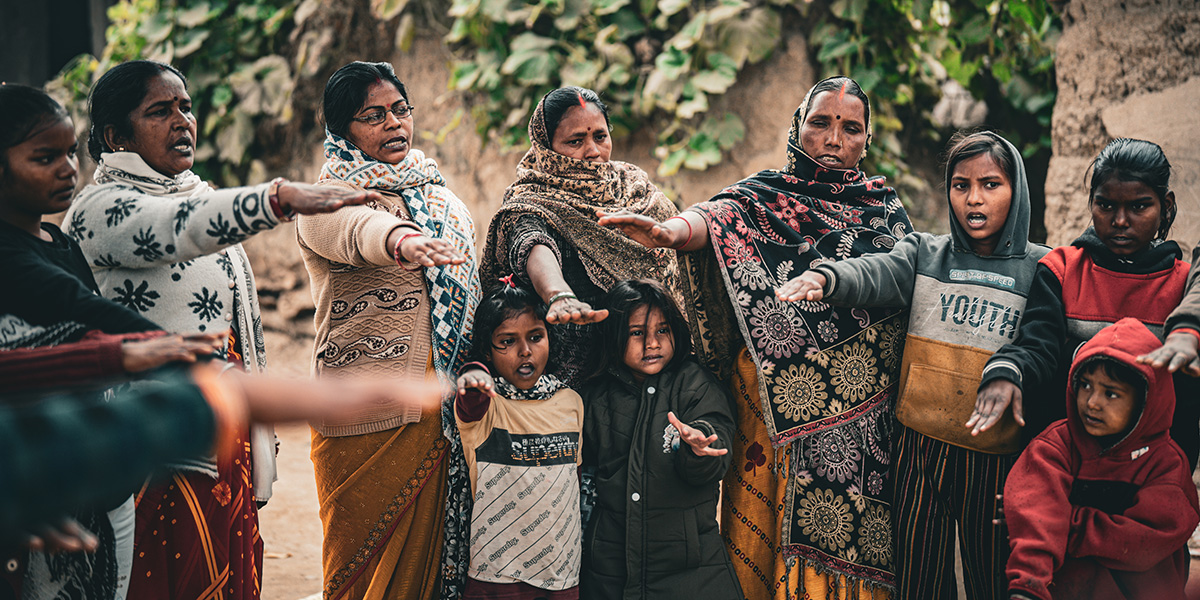
In picture: The women committing to ensuring school education for their daughters at a Shiksha Chaupal in Kaimur, Bihar.
Schools are often imagined as places children go to learn. But learning never happens in isolation. A child’s education is shaped every day by family rhythms, community expectations, cultural practices, and economic realities — long before a textbook is opened or a classroom bell rings.
Yet, in many government schools in India, this wider learning ecosystem remains largely invisible in decision-making. Parents and communities are present at the margins but not at the centre. This absence is not benign. It deprives schools of local wisdom, families of ownership in their children’s learning, and children of an education that reflects their lived worlds.
This piece emerges from sustained engagement with public education across three vantage points, community, school, and system. While these positions differ, they converge on one shared concern: what does it truly mean for schools and communities to walk together in a child’s learning journey?
What do we mean by “Community”?
Community is often reduced to parents who attend meetings or sign registers. In reality, it is far broader and richer.
Community includes extended families, neighbours, elders, youth groups, local artisans, cultural and religious institutions, shopkeepers, and local governance bodies. It is the social and cultural ecosystem that surrounds the child, shaping values, responsibilities, aspirations, and constraints.
Children learn constantly through these interactions. They observe who works, who leads, who is respected, and who is excluded. They pick up life skills, social norms, aspirations, and role models, often unconsciously. At the same time, they also absorb social disparities, orthodox practices, and prevailing belief systems. Community, therefore, becomes the lens through which children begin to understand the world, its possibilities, and its limits.
Culture functions as an ecosystem in this sense. Learning does not only happen in classrooms. It also happens in places where people gather and converse. Local festivals such as Ganesh Utsav or Durga Puja, village meetings, religious gatherings, or weekly markets are spaces where the community comes together, exchanges ideas, and negotiates shared values.
These cultural spaces can play an important role in school–community relationships in at least two ways. First, they can be used to publicly recognise and celebrate positive work happening in schools, allowing teachers to feel seen and valued beyond formal inspections. Second, they can become neutral spaces where teachers and community members meet outside school premises, where hierarchies soften and interactions feel more equal.
Community engagement, therefore, cannot be limited to attendance or compliance. It begins when communities are aware of what schools are doing and are meaningfully involved in decisions that affect children’s lives. Anything less is only proximity without participation.
The problem is that schools and communities often function as parallel worlds today. Teachers and school leaders frequently see parents as outsiders, well-intentioned perhaps, but ill-equipped to contribute. Parents, in turn, approach schools cautiously, unsure whether their voices carry legitimacy.
This distance is not natural. It is produced.
Many parents internalise a sense of inadequacy in school spaces, especially when faced with formal language, professional authority, and bureaucratic procedures. Over time, the message becomes clear: the school belongs to experts; families are expected to trust, comply, and step back.
Why engagement feels absent
The symptoms of this disconnect are visible everywhere.
Parent–Teacher Meetings see low attendance.
School Management Committees exist largely on paper.
Key decisions are taken without consulting those most affected.
Often, schools are surprised when policies fail on the ground. Consider something as simple as a rule mandating footwear for all students. On paper, it appears sensible. In practice, when children walk through muddy fields, across streams, and along unpaved paths – sometimes a common sight in rural or remote settings. Shoes wear out quickly. Families cannot afford frequent replacements. A decision meant to promote dignity becomes a source of stress and exclusion.
This is not an isolated example. Similar misalignments surface around school timings, language of instruction, attendance expectations during agricultural seasons, and cultural practices. When schools do not listen, they design rules that do not fit children’s lives.
The result is rarely harmful. But intention alone does not determine impact.
Importance, and nature of shared partnership
So why does partnership between schools and communities matter?
At a practical level, most government schools struggle with two things: accountability and recognition.
Teachers work under difficult conditions, limited infrastructure, high administrative load, and intense scrutiny, yet their effort often goes unseen. Communities, as immediate beneficiaries, are uniquely positioned to play a role here. Not as inspectors, but as co-owners.
When communities are engaged, accountability becomes relational rather than punitive. Schools are not merely evaluated; they are supported. Teachers are not just monitored; they are recognised.
This plays out in simple, everyday ways. Schools that receive no visitors beyond inspections often experience isolation. Teachers in such contexts report fatigue, disengagement, and a gradual erosion of motivation. In contrast, schools that experience regular interaction — whether through community visits, informal conversations, or local support — often function with greater confidence and consistency.
A visible example can be seen in schools located closer to block or district headquarters. These schools often perform better, not only because of oversight, but because of frequent interaction, feedback, and acknowledgment. The presence of people who listen and respond matters.
Equally important is decision-making. Every choice a school makes affects children, and children are inseparable from families and communities. Decisions taken without this context are likely to be insensitive, even when well-intentioned.
Take seasonal migration or harvest periods. Attendance drops not because families are careless, but because survival demands student participation in fields. A school that understands this can adapt, adjusting expectations, pacing learning differently, or finding creative ways to sustain engagement. Such sensitivity is only possible when trust exists.
From a system perspective, this is a question of mutual accountability. When parents are treated only as recipients, structures weaken. When they are treated as partners, schools gain allies.
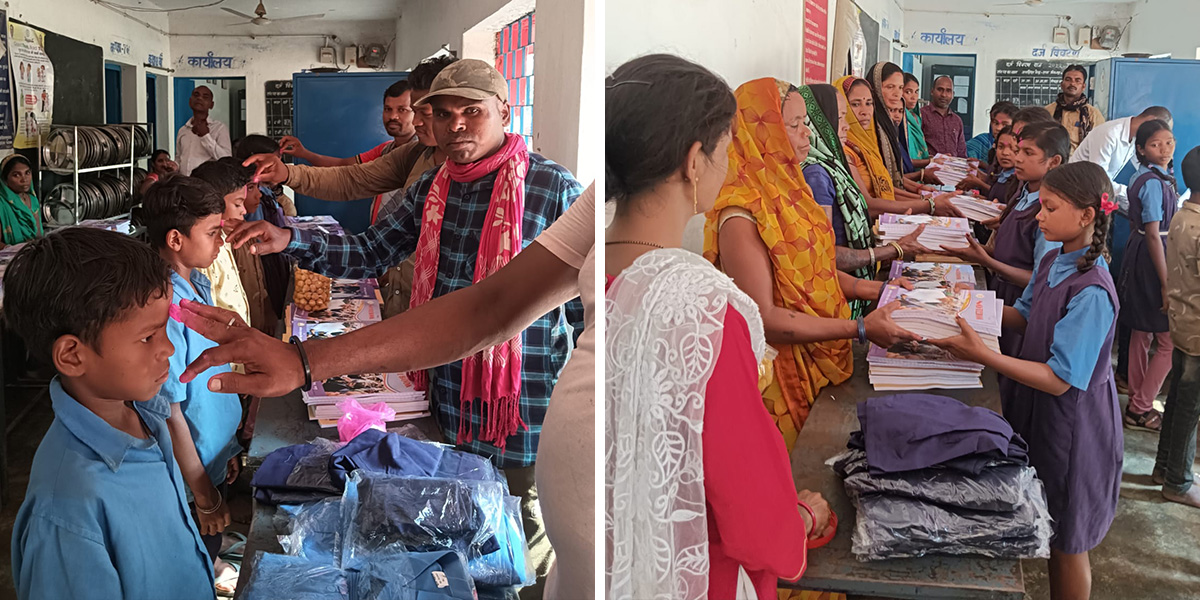
In pictures: SDMC members and community members welcoming children after summer vacation and distributing books to the children in Korba district, Chhattisgarh
Parents as Partners, not peripheral actors
Partnership does not happen automatically. It must be cultivated.
Parents often believe their responsibility ends with enrollment and attendance. Teachers often believe theirs begins and ends inside the classroom. Both miss a crucial truth: learning is porous. Children carry experiences, values, and questions back and forth between home and school every day.
When parents and teachers see each other as partners, accountability flows both ways. Schools gain insight into children’s realities. Families gain clarity about learning processes. Together, they create coherence in a child’s learning life.
But this shift demands a change in mindset.
The hardest barrier: Authority and Humility
Perhaps the most entrenched barrier to community engagement is the belief that knowledge flows only one way from school to community.
This assumption quietly builds walls.
Breaking it requires humility from schools and confidence from communities. It requires acknowledging that while teachers bring pedagogical expertise, families bring contextual intelligence – the lived knowledge of a child’s world.
It includes understanding household responsibilities, migration patterns, local livelihoods, cultural norms, language practices, and social pressures. It is knowing why a child is tired during certain seasons, why attendance fluctuates, or why certain behaviours emerge. This knowledge does not come from training manuals; it comes from lived experience.
Neither pedagogical expertise nor contextual intelligence can substitute the other.
This is not abstract philosophy. It is deeply practical.
Schools that listen design better rules.
Schools that trust earn goodwill.
Communities that feel respected invest time, effort, and care.
Beyond accountability: The power of Recognition
Accountability alone cannot sustain partnership. Recognition matters just as much.
When schools do well, when children perform, participate, or progress, communities should celebrate these efforts. Teachers need to feel that their work is valued, not invisible. Recognition builds morale. Morale sustains commitment.
When recognition flows both ways, the relationship shifts. Schools stop feeling like isolated government units. They become shared community institutions.
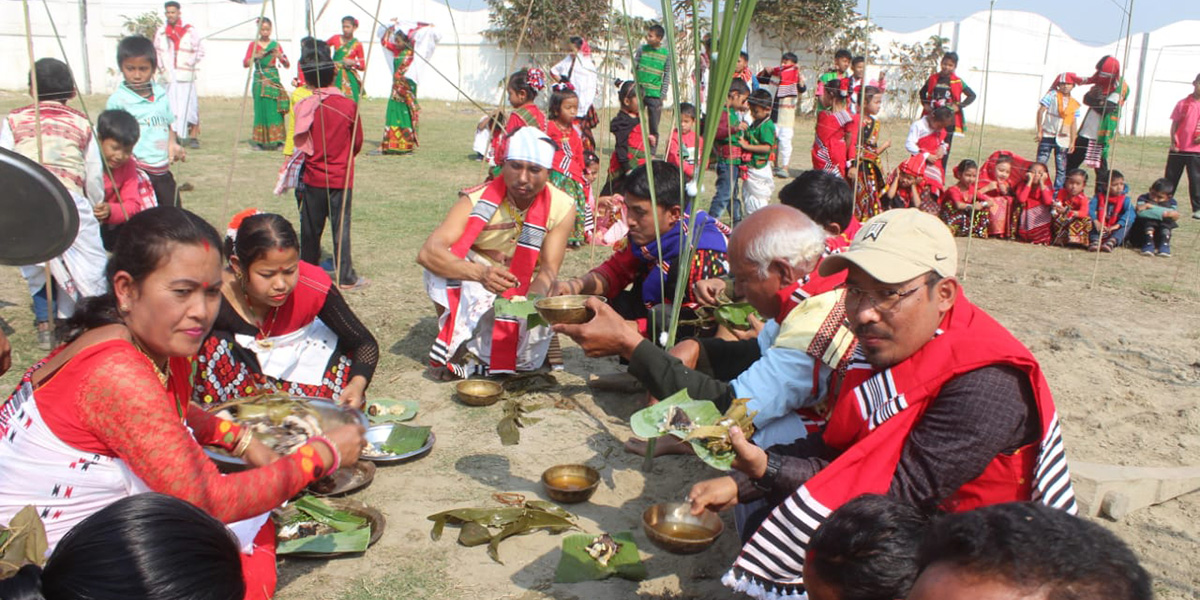
In picture: The community and school celebrating a festival together at Hummingbird School, Majuli, Assam
Porous boundaries and local wisdom
Partnership also opens the possibility of more porous schools.
Porosity is not about lowering standards. It is about widening relevance.
Communities carry deep reservoirs of knowledge, local crafts, oral histories, ecological understanding, and cultural practices. When schools invite this wisdom in, learning becomes grounded and alive.
Children learn that education is not confined to textbooks. It is connected to identity, work, history, and belonging.
Teachers are not diminished by this; their role is expanded.
Seeds of Hope
Across the country, there are signs of change.
Parents joining literacy drives.
Villages supporting school infrastructure.
SMCs slowly finding their voice.
These efforts are often modest, uneven, and fragile. But they matter.
Community engagement does not require grand programs. It begins with simple acts: listening before deciding, inviting before instructing, recognising before criticising.
Closing reflection
From different vantage points, community, school, and system, the same truth keeps surfacing:
A child’s learning life cannot be carried by schools alone.
When schools see communities not as interruptions but as partners, something shifts. Education moves beyond walls. Learning becomes shared work. And children experience coherence instead of contradiction.
The question, then, is not whether community engagement is possible.
It is whether schools are willing to step back just enough to let others step in.
That choice, quiet, uncomfortable, and deeply human, may matter more than any reform we design.
Images used in this piece are courtesy of the authors and the institutions they represent.
About the Author
Satish Kumar
Satish Kumar is an education professional with over five years of experience in grassroots implementation, project management, and leadership. Currently, Project Manager (Education) at The Hans Foundation, he leads foundational literacy and STEM efforts in Rajasthan. His past roles impacted 1.5 lakh children across North India. A Master’s graduate from Azim Premji University, with further training from Harvard and IISc, Satish brings a learner-centred, justice-driven lens to education, with a focus on gender, community, and teacher development.
Vinay R Sanjivi
Vinay is a systems leader and strategist, currently Head of Programs at ShikshaLokam, a nonprofit focused on strengthening leadership in India’s public education system. He designs and drives large-scale education programmes with governments and civil society, blending ecosystem thinking with on-ground insights. Previously, he led capacity-building initiatives for Andhra Pradesh’s residential schools and worked at Goldman Sachs as a Senior Finance Analyst. A Teach For India Fellow and policy consultant, Vinay holds a Master’s in Education from Azim Premji University. He is committed to building ecosystems where leadership is shared and every child can thrive.
Deepak Rajput
Deepak is a science teacher at the Hummingbird School on Majuli Island, which primarily serves the local Mishing community. He focuses on bringing science to life for children through hands-on activities, experiments, and meaningful engagement with the community. Deepak holds a Master’s degree in Education (M.A. Education) from Azim Premji University and has been a part of the Hummingbird School for the past five years.